
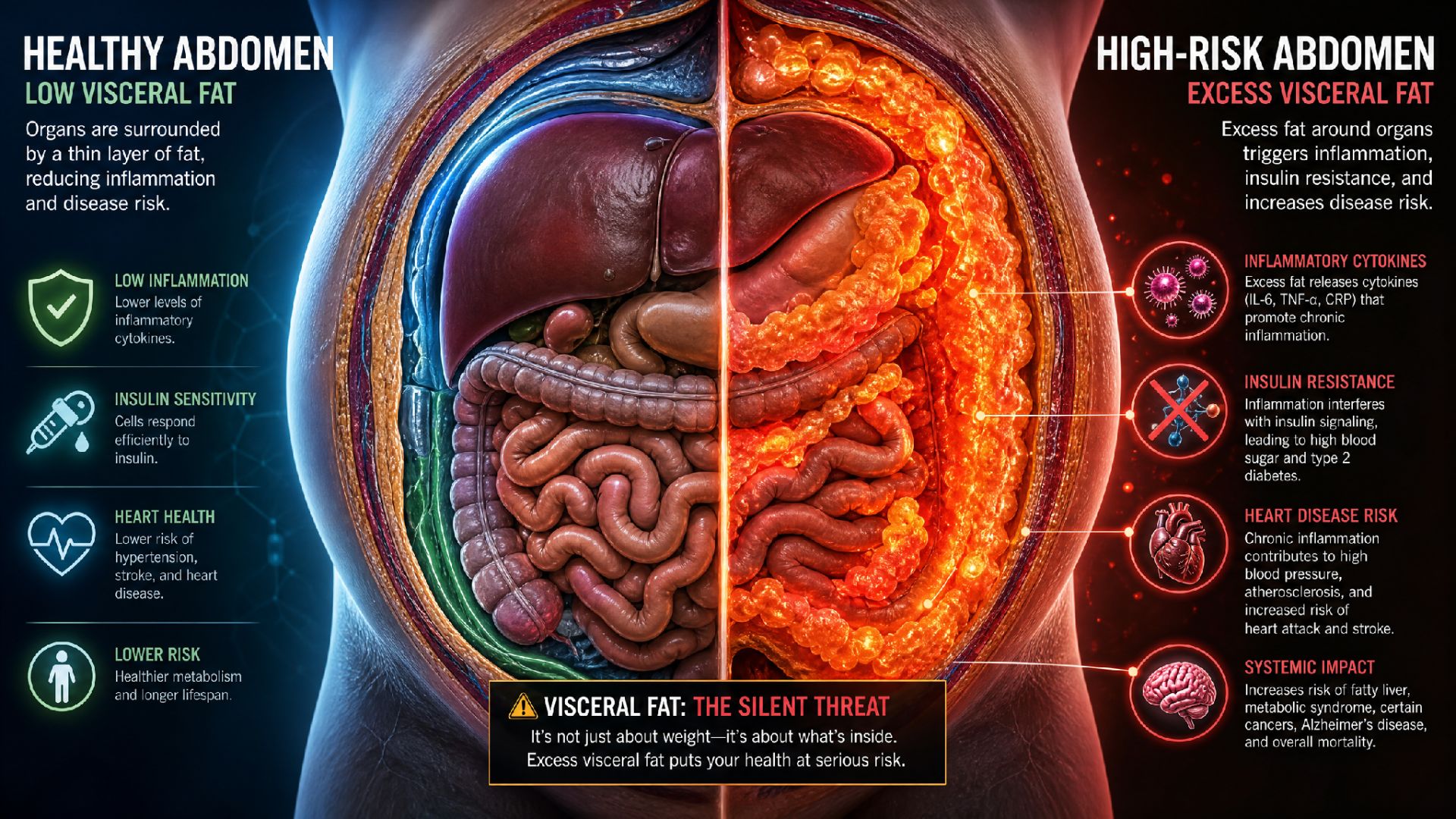
The Hidden Danger: Understanding and Reducing Visceral Fat
When we think about body fat, we usually think about the fat we can see and pinch — the fat just under the skin on our thighs, arms, or hips. While this type of fat (subcutaneous fat) may be a cosmetic concern for some, it is generally benign from a health perspective.
However, there is another type of fat that is far more insidious because it is largely invisible: visceral fat. This fat lies deep within the abdominal cavity, wrapping around vital organs like the liver, stomach, and intestines. Understanding the dangers of visceral fat is critical for anyone looking to improve their long-term health and longevity.
Why is Visceral Fat So Dangerous?
Visceral fat is not just a passive storage depot for excess calories; it is an active endocrine organ. It secretes a variety of hormones and inflammatory chemicals (cytokines) directly into the bloodstream and the portal vein, which leads straight to the liver [1].
This constant stream of inflammatory signals wreaks havoc on the body's metabolic systems.
1. Insulin Resistance and Diabetes
The inflammatory cytokines produced by visceral fat interfere with the body's ability to use insulin effectively. This leads to insulin resistance, a condition where the pancreas must produce more and more insulin to keep blood sugar levels normal. Over time, this can progress to type 2 diabetes [2].
2. Cardiovascular Disease
Visceral fat is strongly linked to an increased risk of heart disease. The inflammatory chemicals it releases contribute to the buildup of plaque in the arteries (atherosclerosis). It also negatively impacts blood lipid profiles, increasing "bad" LDL cholesterol and triglycerides while lowering "good" HDL cholesterol [3].
3. Organ Damage
Because visceral fat surrounds the organs, its inflammatory output can directly damage them. For example, it is a primary driver of Non-Alcoholic Fatty Liver Disease (NAFLD), which can lead to liver inflammation and cirrhosis.
How Do You Know if You Have Visceral Fat?
Because it is hidden deep inside, you can have a high amount of visceral fat even if you are not visibly overweight (a condition sometimes called "TOFI" — Thin on the Outside, Fat on the Inside).
While an MRI or CT scan is the most accurate way to measure visceral fat, the simplest and most practical indicator is your waist circumference.
For women, a waist circumference of 35 inches (89 cm) or more indicates a high risk.
For men, a waist circumference of 40 inches (102 cm) or more indicates a high risk.
Strategies for Reducing Visceral Fat
The good news is that visceral fat is highly responsive to lifestyle changes. In fact, when you start losing weight, visceral fat is often the first type of fat to go [4].
1. Dietary Interventions
Cut the Sugar: Fructose, found in sugary drinks and processed foods, is uniquely prone to being stored as visceral fat in the liver. Eliminating liquid calories is the fastest way to reduce this burden.
Increase Soluble Fiber: Foods like oats, flaxseeds, legumes, and berries form a gel in the digestive tract, which helps slow down digestion, stabilize blood sugar, and reduce visceral fat accumulation.
Prioritize Protein: Adequate protein intake helps preserve muscle mass and keeps you full, reducing overall calorie intake.
2. The Role of Exercise
You cannot "spot reduce" belly fat with crunches or sit-ups. To lose visceral fat, you must lower your overall body fat percentage.
A combination of moderate-to-vigorous aerobic exercise (like brisk walking, cycling, or swimming) and resistance training is the most effective approach. Aim for at least 150 minutes of aerobic activity and two strength training sessions per week.
3. Stress and Sleep Management
Chronic stress elevates cortisol levels, a hormone that specifically directs the body to store fat in the abdominal region (visceral fat). Managing stress through mindfulness, yoga, or deep breathing is a crucial component of reducing belly fat.
Similarly, sleep deprivation disrupts metabolic hormones and increases the likelihood of visceral fat accumulation. Prioritize 7 to 9 hours of quality sleep per night.
Key Takeaways
"Visceral fat is the invisible engine of metabolic disease. By addressing the root causes — poor diet, lack of movement, and chronic stress — you can shut down the inflammation and reclaim your health."
Visceral fat is a serious health risk, but it is one that you can actively manage. By focusing on a whole-foods diet, regular physical activity, and stress management, you can reduce your visceral fat stores, lower your risk of chronic disease, and build a healthier, more resilient body.
References
Harvard Health Publishing. (2024). Taking Aim at Belly Fat.
Mittal, B. (2019). Subcutaneous adipose tissue & visceral adipose tissue. PMC.
Klein, S. (2004). The case of visceral fat: argument for the defense. PMC.
Rush University Medical Center. (n.d.). Losing Belly Fat.


